Villa vs Apartment in Bangalore at ₹5 Crore and Above
Below about ₹2 Cr the villa-versus-apartment question in Bangalore is usually settled by budget: you buy the apartment because the villa is not available at the price. At ₹5 Cr and above the choice becomes real, and the two products stop being versions of the same thing. They differ in what the sale deed conveys, in how the running cost is structured, in how quickly you can get out, and in how much of the price is land. This page sets those differences out plainly. It is not an argument for one format, it is an argument for knowing which one you are buying.
What the Sale Deed Actually Conveys
This is the difference everything else follows from. When you buy an apartment in Karnataka you buy the flat plus an undivided share of the land (UDS) under the building. The land is owned collectively by all the owners, and your share is worked out in proportion to your apartment's area against the total area of all apartments in the project. The framework is the Karnataka Apartment Ownership Act, 1972, under which the promoter files a Deed of Declaration describing the property, the apartment boundaries and each owner's undivided share in the common areas. You cannot point at a piece of ground and call it yours.
A villa on its own plot conveys the plot itself, with survey boundaries and dimensions, plus the structure on it. In a gated community the internal roads, parks and common infrastructure remain common, but the ground under your house is yours alone and is described as such in the deed.
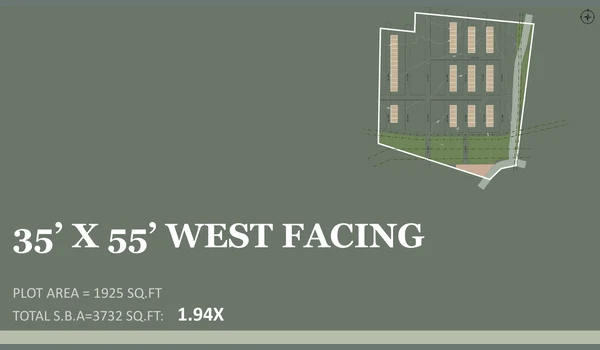
Why it matters over a long hold: land does not depreciate and a building does. In an apartment, the proportion of your cheque represented by land is small and gets smaller as buildings rise. In a villa it is larger, though at Nambiar Beverly Park, where the saleable area is roughly 1.84 to 1.96 times the plot area, the structure is still the bigger half of the price. Anyone who tells you a villa purchase is essentially a land purchase has not done that arithmetic.
Maintenance: Two Different Cost Structures
An apartment tower's running cost is dominated by shared plant, lifts, generators, sewage treatment, fire systems, water pumps, a clubhouse, and that cost is divided across hundreds of homes. It is a large bill split many ways, billed monthly, and largely out of your control.
A villa splits differently. The community charge covers roads, street lighting, security, parks, water and drainage; your own structure is your problem. External painting, waterproofing, terrace membranes, plumbing, garden and, in a home with a private lift, the lift's annual maintenance contract are all yours to schedule and pay for. That is more freedom and more exposure. Villa owners who budget only the community charge are usually surprised in year five, when the first serious external maintenance falls due.
At Nambiar Beverly Park the community charge is stated as ₹48 per sq.ft. for the first year including 18% GST, with a maintenance deposit of the same amount payable alongside. Because that is levied on saleable area, a larger villa carries a proportionally larger bill, which is exactly the point people miss when comparing a 4,600 sq.ft. villa against a 3,000 sq.ft. apartment.
Amenity Access
In this price band an apartment almost always arrives with a clubhouse, pool and gym, because the density supports them. A villa community can supply the same, but it needs scale to do so and the cost per home is higher.
Treat this as a question to ask rather than an assumption. For Nambiar Beverly Park, the documented common provisions are a 60,000 sq.ft. clubhouse, including a duplex and indoor amenities, together with six landscaped parks along the southern edge, 12 m and 12.19 m internal roads, 9.14 m secondary roads, an entrance plaza with a dedicated bus bay and a retail and commercial block at the gate. The clubhouse is on record; the schedule of facilities inside it has not been released, so no pool, gym or sports court is on record for this project and none is listed here. That is an open item, not a denial, put it to the developer in writing and get the answer into the agreement rather than accepting a brochure image. Be wary in particular of any list that reads like Nambiar District 25's: that is a 3,00,000 sq.ft. clubhouse serving apartment towers, five times the size of this one, and its facilities are not this project's.
Resale Liquidity
Apartments are easier to price and easier to sell. Twenty near-identical units in the same tower generate visible comparables, so a buyer, a bank and a valuer can all agree on a number quickly. A villa is one of a kind, its own plot, its own orientation, its own condition, which widens the gap between what a seller asks and what a buyer will pay, and lengthens the sale.
The price band compounds it. The pool of buyers who can fund a five-to-seven-crore home is small in any Bangalore suburb. Assume a resale takes months rather than weeks, and assume a discount if you have to move quickly. This is the single strongest practical argument for buying a villa to live in rather than to trade.
Financing
The lending rules are the same for both, but they bite harder at a large ticket. The Reserve Bank's loan-to-value norms cap housing loans above ₹75 lakh at 75% of the property value, so at least a quarter of the price comes from your own funds, and stamp duty and registration are on top of that, not inside the loan. On a ₹5.5 Cr purchase that is a very large cheque before the bank contributes anything.
Two practical differences. First, an under-construction purchase is normally disbursed against construction stages, so your money goes out over time rather than at once. Second, lenders are more conservative on approvals and title for individual houses than for a large approved tower, and on a project without registration under the Real Estate (Regulation and Development) Act many banks will simply wait. Ask your lender where it stands before you commit to a payment schedule.
Privacy, Noise and Control
A villa has no shared walls, no shared floor slab and no lobby. Noise is the most under-rated variable in apartment living and the one buyers complain about most after moving in. A villa also lets you change things, a different kitchen, a car charger, solar on the roof, subject to the scheme's rules and to the statutory setbacks, which on plots of 150 to 250 sq.m under the Karnataka zoning regulations run to 1.0 m at the front, 0.8 m at the rear and 0.8 m at each side. Those margins are tight, so plan any future change around them rather than assuming room to expand.
The other side of the same coin: a villa is more house to run. Security, staff, garden, water and the building envelope all become an owner's job in a way they never are on the eleventh floor.
Which Buyer Each Format Suits
- An apartment suits a buyer who wants low personal maintenance effort, a bundled clubhouse, a central location and a resale market with clear comparables, and who is not troubled by shared walls.
- A villa suits a buyer who wants space, privacy and their own ground, intends a long hold, and can carry both the larger up-front funding gap and the ongoing cost of the structure.
- Neither suits a buyer looking for a quick capital gain per rupee committed. At this ticket both are slow-moving assets, and land bought outright does that job better than either.
The most useful test is the one people skip: write down how long you expect to hold, and what you would do if you had to sell in ninety days. If the honest answer to the second question is uncomfortable, the format is not the problem, the price band is.
Where to Go Next
More explainers are indexed on the Nambiar Beverly Park blog. For the project's own figures, see the Nambiar Beverly Park price and cost breakdown and the villa plans and configurations. All prices quoted here are indicative and subject to change.
Explore Nambiar Beverly Park