Villa vs Apartment at Nambiar Beverly Park
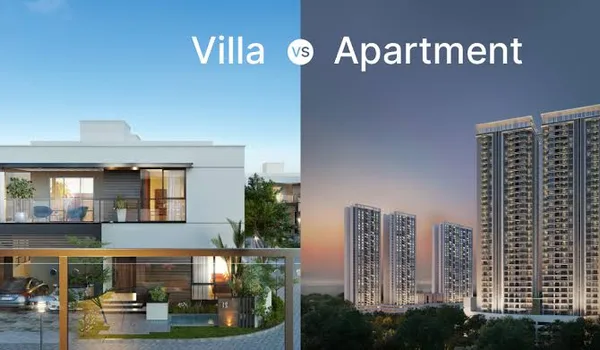
At a budget of roughly ₹5.5 to ₹7.3 Cr in Bangalore, a villa and a large apartment are both genuinely available, and the honest answer to which is better is that it depends on the household, not on the asset. A villa gives you land you own outright, space that is entirely yours and a house you can alter. An apartment gives you shared facilities you could not build alone, far lower personal maintenance, a deeper resale market and easier financing. This page compares the two at this ticket size, using Nambiar Beverly Park as the villa case, and it does not conclude that the villa always wins, because at this price, for a good number of buyers, it does not.
The resale-specific argument is on the resale and appreciation page, and the wider commercial view is on the investment page.
The Comparison in Short
| Villa | Apartment | |
| Land | Owned outright, defined boundary | Undivided share, not separable |
| Maintenance | Largely yours to arrange and fund | Pooled and managed for you |
| Resale market | Thin; months, not weeks | Deeper; comparable units to price against |
| Shared facilities | Depends entirely on the project | Usually extensive and committed |
| Alteration | Wide latitude within approvals | Constrained by the association |
| Privacy and space | No shared walls, private outdoor area | Shared walls, balcony only |
| Security | Perimeter-based; house is your own | Layered; lobby, floor and unit |
Every row is a trade rather than a win. Read them against how your household actually lives, not against which column has more ticks.
Land Ownership
This is the clearest structural difference. Buy a villa here and you own a defined parcel, 1,925 sq.ft. under a 35 × 55 or 2,520 sq.ft. under a 40 × 63, with a boundary, a survey position and a title of its own. Buy an apartment and you own an undivided share of the land under the whole building, which cannot be separated, fenced or sold on its own.
The long-run consequence favours the villa. Land does not depreciate; buildings do. An apartment's value over decades is tied to a structure with a finite life and to whether a large group of owners can ever agree to redevelop. A villa plot can be rebuilt on by one person deciding to.
The qualification is important, though, and it is specific to this project: saleable area here runs at 1.84 to 1.96 times the plot area, and price is struck on saleable area at an indicative ₹13,499 per sq.ft. So the larger share of your money is in the building even in the villa case. The land advantage is real but smaller than the phrase "you own the land" makes it sound.
Maintenance Burden
This is the row that changes most people's answer, and it is consistently underweighted at the point of purchase.
In an apartment, the roof, the lifts, the pumps, the generator, the façade, the drains and the grounds are somebody else's problem, funded from a pooled charge and managed by a committee or a facility firm. You pay and it happens. In a villa, a large part of that list becomes yours in person: the terrace waterproofing, the external paint, the plumbing, the private lift, the garden, the pest control. A house of 3,732 to 4,638 sq.ft. across three levels is a real ongoing commitment of both money and attention.
Two specifics for this project. Maintenance is charged at ₹48 per sq.ft. for the first year including 18% GST, with an equal maintenance deposit, and the service scope behind that charge has not been itemised, worth asking about, particularly as no shared building has been announced. And every villa here has a private lift: excellent to live with, and a piece of machinery with a service contract, an annual cost and an inspection regime attached.
If nobody in the household wants to manage a building, this row alone can settle the decision in the apartment's favour.
Resale Liquidity
The apartment wins this one, clearly.
A large apartment in an established Bangalore project has comparable units in the same tower that have sold recently. That gives a buyer a reference price, a valuer a basis and a lender confidence, and it means the market can absorb your unit at a knowable number. A ₹6 Cr villa has none of that. It is individual, its buyer pool is small, and a sale is measured in months rather than weeks. A forced exit normally means a discount, and that discount tends to exceed a year's appreciation.
A specific caution here: while later phases of a 76-acre development are still selling, a Phase 1 resale competes against brand-new stock next door with a builder's warranty attached. That is a structural headwind for early resale in any phased project, and it is worth understanding before buying with a five-year exit in mind.
Amenity Access
This row is unusually relevant here, and it goes against the villa on the shared side.
An apartment at this budget in Bangalore normally comes with a substantial shared facility, that is the format's central proposition, and the cost is spread across hundreds of households. At Nambiar Beverly Park a 60,000 sq.ft. clubhouse with a duplex and indoor amenities is on record, but its facility schedule has not been released. No pool, gym, sports court, amphitheatre or jogging track is on record. The documented common provision is the clubhouse, six landscaped parks along the southern edge, 12 m and 12.19 m internal roads with 9.14 m secondary roads, an entrance plaza with a dedicated bus bay, and a retail and commercial block at the gate. If a facility matters to you, ask for it in writing and check it again against the K-RERA registration once granted, do not price in what has not been committed.
The counter-argument is the villa itself, and it is a strong one. The second floor of every villa is a terrace level, a multipurpose room or hall opening onto a celebration terrace, plus a wellness terrace, a yoga deck, a dance deck, a barbeque zone, a utility terrace and the domestic-help room with its own bath, and a private lift serves all three levels. Most of what a household walks to a shared building for exists inside the house, available at any hour, booked from nobody. That case is made in full on the terrace level page.
What it does not replace: a pool, shared equipment at scale, and the place where neighbours in a new community meet each other and children find playmates. A household that wants those should weigh an apartment seriously.
Financing
Financing is easier and cheaper on the apartment side, for reasons that are structural rather than about any one project.
- Valuation. A lender values an apartment against recent sales of near-identical units. A one-off villa has to be valued on its own, which usually means a conservative number.
- Project approval. Lenders maintain lists of approved projects, and a large registered apartment development is more likely to be on them. This project is pre-launch with no K-RERA registration, which is a material fact for any lender, expect to be asked about it.
- Loan-to-value. On large loans, lenders typically fund around three-quarters of the property value, so the down payment on a ₹6 Cr purchase is substantial in absolute terms. Confirm the applicable ratio with your own lender rather than assuming.
- What the loan does not cover. Registration and stamp duty are excluded from the quoted price and are generally not funded. Any preferential-location charge on an east-facing or corner plot, and the maintenance deposit, also come out of your own funds.
- Disbursement. On an under-construction purchase, money is released against construction stages. With launch and possession dates stated by the developer but not yet binding for this project, the schedule over which you would draw and service that loan is not yet defined.
None of that makes a villa unfinanceable. It makes it slower, more document-heavy and more dependent on your own liquidity, which is a planning problem, not a deal-breaker.
Who Each Format Actually Suits
The villa suits a household that wants space and privacy as the primary good and will genuinely use it: three generations under one roof, someone working from home who needs a floor rather than a corner, a family that entertains, a household with full-time staff for whom a separate room with its own bath is a real requirement. It suits people who are comfortable running a building, or paying someone to. And it suits a long hold by an owner-occupier, a decade or more, not a five-year trade.
The apartment suits a household that values shared facilities it could not build alone, particularly a pool and a place for children to find friends. It suits people who travel often and want a home that can be locked and left. It suits anyone who does not want to manage maintenance personally, anyone who may need to sell within a few years, and anyone who wants a clean lender process and a valuation the market can confirm.
And a fair statement of the case against the villa in this project specifically: the clubhouse is on record at 60,000 sq.ft. but its facility schedule is not; no finishes schedule has been published; the launch and possession dates are the developer's stated dates rather than commitments; K-RERA registration has been applied for and approval is expected by 20 August 2026; a 220 kV HT line has been realigned along the southern boundary with a 400 kVA HT line to the east; and the developer has no completed project on this corridor to inspect, though it has delivered villa communities elsewhere in Bangalore, Nambiar Bellezea and Nambiar Ellegenza, and is developing Nambiar District 25 and Nambiar Millennia.
If you decide the villa format is right for you, the entry point is indicative pricing from ₹5.48 Cr for a 35 × 55 and ₹6.82 Cr for a 40 × 63, inclusive of the development and infrastructure charge and 5% GST, excluding registration, stamp duty and maintenance, with a preferential-location charge on east-facing and corner plots. All figures are indicative and subject to change. If you would like the current sheet and the drawings for a specific type, register your interest and we will send them.
K-RERA Status
K-RERA registration for this project has been applied for; approval is expected by 20 August 2026, it is pre-launch. Until registration is granted, areas, layout, payment terms and timelines are not legally fixed, and nothing on this page is a substitute for the filed documents. Verify status at rera.karnataka.gov.in.
Frequently Asked Questions about Villa vs Apartment
1. At ₹6 Cr in Bangalore, is a villa or an apartment the better buy?
Neither, universally. A villa gives you land owned outright, no shared walls and latitude to alter the house. An apartment gives you shared facilities, pooled maintenance, a deeper resale market and easier financing. It depends on whether your household wants control or liquidity.
2. Do I really own the land with a villa?
Yes, a defined parcel of 1,925 sq.ft. or 2,520 sq.ft., with its own boundary and title, rather than an undivided share. One qualification: price is struck on saleable area, so most of your money is still in the structure.
3. Is villa maintenance really that much heavier?
Yes. In an apartment the roof, lifts and grounds are managed for you from a pooled charge; in a villa, waterproofing, paint, plumbing and the private lift are yours to fund. Maintenance here is ₹48 per sq.ft. for the first year including 18% GST.
4. Which is easier to sell?
The apartment, clearly. It has comparable units that have recently sold, which gives buyers a reference price, valuers a basis and lenders confidence. A ₹6 Cr villa is individual, its buyer pool is small, and a sale takes months rather than weeks.
5. How does amenity access compare here specifically?
Shared side unclear, private side strong. A 60,000 sq.ft. clubhouse with a duplex is on record, but no facility schedule has been released, so no pool or gym is confirmed. Every villa's second floor is a terrace level, with a private lift reaching it.
6. Is a villa harder to finance?
Generally, yes. A one-off villa is valued on its own and usually conservatively, where apartments have near-identical recent sales to price against. This project is also pre-launch with no K-RERA registration issued, which any lender will raise. Confirm terms with your lender.
7. Who should not buy the villa?
Anyone who may need to sell within a few years; anyone unwilling to manage a building or pay someone to; anyone whose household specifically wants a pool, since no facility schedule has been released; and anyone who needs a contractually defined possession date.
Explore Nambiar Beverly Park